

 |
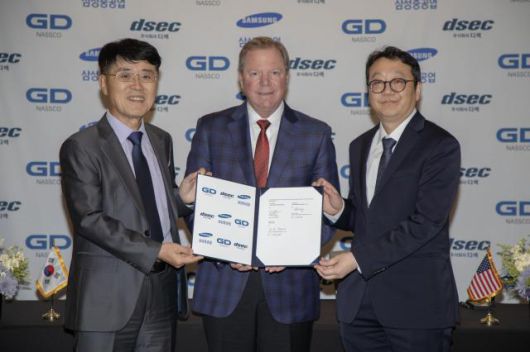
1. (오른쪽부터)강주년 삼성중공업 팀장, 데이브 카버(Dave Carver) 나스코 사장, 윤석용 디섹 사장이 세계 워크보트쇼가 열린 미국 뉴올리언즈에서 만나 사업 협력 합의서를 체결했다. |
<이미지를 클릭하시면 크게 보실 수 있습니다> |
SEOUL, December 05 (AJP) - Samsung Heavy Industries is deepening its shipbuilding cooperation with the United States, targeting next-generation naval support ships and liquefied natural gas (LNG) vessels as part of an expanded push into the U.S. market.
At the International WorkBoat Show in New Orleans this week, Samsung signed a three-way business cooperation agreement with U.S. shipbuilder General Dynamics NASSCO and South Korean engineering firm DSEC. The agreement covers collaboration in ship design, equipment supply, and workforce development, and includes plans to jointly bid for the U.S. Navy’s next-generation support ship program.
The new support vessels are intended to boost the Navy’s rapid mobility and enhance its ability to deliver fuel, ammunition and supplies at sea.
San Diego–based NASSCO, a major U.S. naval and commercial shipbuilder, operates five shipyards across four states. DSEC has worked with NASSCO for two decades, a longstanding partnership that Samsung says will help strengthen synergy among the three companies.
Samsung also signed a memorandum of understanding with Conrad Shipyard to jointly construct LNG bunkering vessels. Conrad, which runs five yards in Louisiana and Texas, builds and repairs a wide range of vessels, including barges and tugboats. The tie-up aims to accelerate Samsung’s entry into the U.S. LNG transport and bunkering market.
“Our 50 years of shipbuilding expertise will be amplified through Korea-U.S. shipbuilding cooperation, accelerating technology exchange and workforce development to bolster the competitiveness of U.S. shipbuilding,” Samsung Heavy Industries said in a statement.
* This article, published by Aju Business Daily, was translated by AI and edited by AJP.
Lee Nak-yeong 기자 nakk@ajunews.com
- Copyright ⓒ [아주경제 ajunews.com] 무단전재 배포금지 -
이 기사의 카테고리는 언론사의 분류를 따릅니다.
기사가 속한 카테고리는 언론사가 분류합니다.
언론사는 한 기사를 두 개 이상의 카테고리로 분류할 수 있습니다.
언론사는 한 기사를 두 개 이상의 카테고리로 분류할 수 있습니다.
