

 |
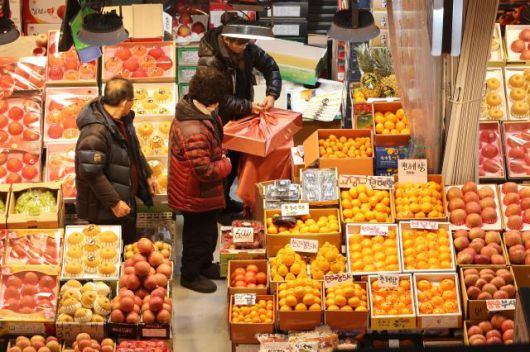
A vendor packages gift sets at Namchon Agricultural and Marine Products Wholesale Market in Incheon, Feb. 13, 2026. AJP Han Jun-gu |
<이미지를 클릭하시면 크게 보실 수 있습니다> |
According to data released by the Bank of Korea on Tuesday, the producer price index (PPI) for January stood at 122.50 (2020=100), up 0.6 percent from the previous month and 1.9 percent from a year earlier. The PPI has recorded monthly increases since September.
By category, prices for agricultural, livestock and fishery products rose 0.7 percent, with agricultural products up 1.4 percent and livestock products up 0.9 percent. Manufactured goods increased 0.6 percent, driven by primary metal products, which rose 3.0 percent, and computer, electronic and optical equipment — including semiconductors — up 1.8 percent.
Service prices climbed 0.7 percent, led by finance and insurance, up 4.7 percent, and transportation services, up 0.7 percent.
Among individual items, prices jumped for DRAM chips (49.5 percent), pumpkins (41.4 percent), silver bullion (43.6 percent), butadiene (26.7 percent), sulfuric acid (15.9 percent), consignment brokerage fees (15.2 percent), primary refined copper products (11.0 percent), beef (6.8 percent) and flash memory (9.9 percent).
Prices fell for frozen squid (19.8 percent), mixed sauces (10.4 percent), hotels (7.5 percent), gasoline (6.0 percent) and diesel (5.1 percent).
The domestic supply price index, which tracks price changes including imports, rose 0.3 percent from the previous month. Raw material prices fell 0.8 percent, while intermediate goods rose 0.6 percent.
The total output price index, which includes export goods along with domestic shipments, rose 1.3 percent, led by manufactured goods, up 1.8 percent, and services, up 0.7 percent.
Lee Moon-hee, head of the Bank of Korea’s price statistics team, said key price factors should be closely monitored, noting that Dubai crude prices rose in February from the previous month while the won-dollar exchange rate edged down.
Still, Lee said spillover effects were likely to remain limited given the nature of the items driving the increase and a decline in domestic supply prices for consumer goods.
He said the rise in producer prices was largely attributable to intermediate goods such as primary metal products and semiconductors, suggesting that any pass-through to consumer prices would likely appear with a time lag.
He added that consumer goods prices in the domestic supply index fell for the first time in eight months in January, since May 2025, as the Lunar New Year fell in January last year versus February this year.
On U.S. tariffs, Lee said they are not directly reflected in the producer price index, as it measures price changes for goods supplied by domestic producers to the domestic market.
Kim Yeon-jae 기자 duswogmlwo77@ajupress.com
- Copyright ⓒ [아주경제 ajunews.com] 무단전재 배포금지 -
이 기사의 카테고리는 언론사의 분류를 따릅니다.
기사가 속한 카테고리는 언론사가 분류합니다.
언론사는 한 기사를 두 개 이상의 카테고리로 분류할 수 있습니다.
언론사는 한 기사를 두 개 이상의 카테고리로 분류할 수 있습니다.
