

 |
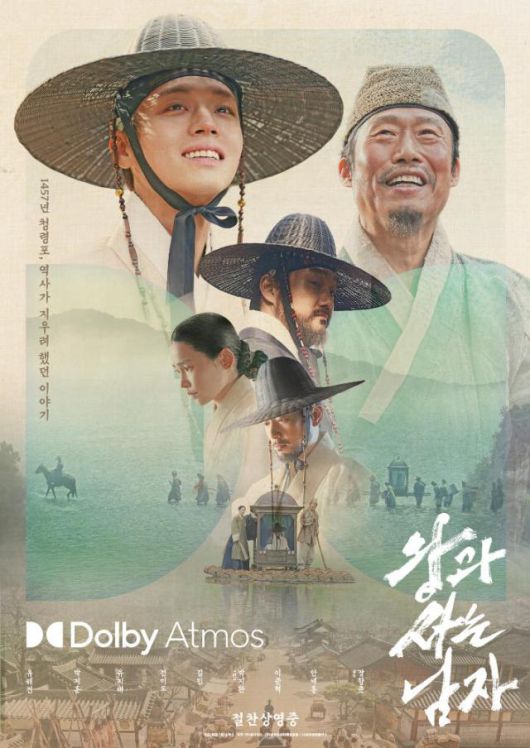
A post of the King's Warden provided by Showbox |
<이미지를 클릭하시면 크게 보실 수 있습니다> |
SEOUL, March 07 (AJP) - In the arithmetic of the Korean film industry, there are hits — and then there are “ten-million films.”
Crossing the 10-million-admissions threshold in a country of roughly 52 million people bears significance beyond a commercial milestone. It means a film has escaped the gravity of niche audiences and become something closer to a shared national experience.
With more than 10 million moviegoers now through theater doors, The King’s Warden has quietly joined that club — becoming the first Korean film to reach the milestone in about two years, after a prolonged blockbuster drought in local cinemas.
For director Jang Hang-jun, it marks a breakthrough that took 24 years to arrive. For star Yoo Hae-jin, it represents a different kind of achievement — the fifth time he has been part of a ten-million blockbuster.
In an industry increasingly fragmented by streaming platforms and shortened attention cycles, that double milestone says something larger about how Korean audiences still choose their cinema heroes.
 |
Jang Hang-jun, director of the King's Warden (Showbox) |
<이미지를 클릭하시면 크게 보실 수 있습니다> |
He entered the industry in the early 1990s and made his directorial debut with the comedy “Break Out the Lighter” in 2002. The film drew notice for its quirky humor and sharp dialogue but never hinted at blockbuster credentials.
The projects that followed — including romantic comedy “Spring Breeze” and sports drama “Battlefield Heroes” — struggled to find audiences. For years afterward, Jang’s filmography thinned.
He wrote television dramas such as Sign and The King of Dramas, became a familiar face on talk shows and variety programs, and developed a reputation for quick wit and effortless storytelling.
For much of the public, he was better known as the genial television personality — and as the husband of star screenwriter Kim Eun-hee, creator of hit series Signal and Kingdom.
The success of The King’s Warden changes that narrative almost overnight.
What once looked like a career of diversions now resembles a long apprenticeship in storytelling. Jang’s television instincts — dialogue timing, character warmth and narrative rhythm — became the film’s quiet engine.
Critics note that his biggest strength lies not in spectacle but in orchestrating performances.
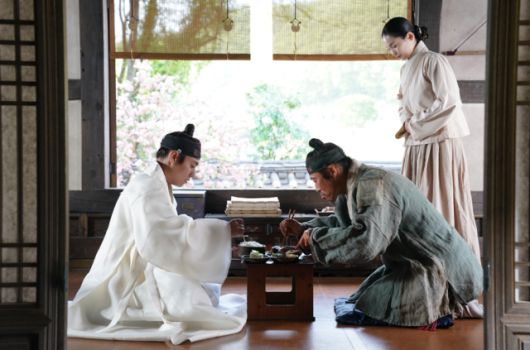 |
A scene from the King's Warden featuring Yoo Hae-jin (Showbox) |
<이미지를 클릭하시면 크게 보실 수 있습니다> |
In Korean cinema terms, the industry sometimes calls this stage “the director just before becoming a master.”
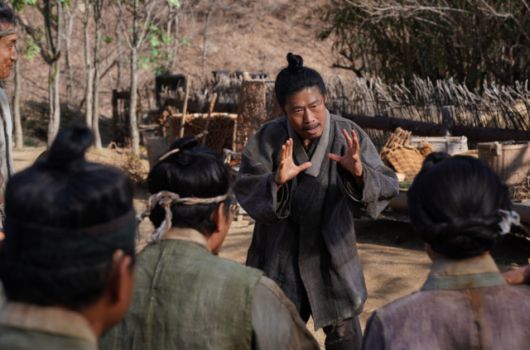 |
Actor Yoo Hae-jin joins a selective group of an actor behind 50-million blockbusters (Showbox) |
<이미지를 클릭하시면 크게 보실 수 있습니다> |
The veteran actor has now appeared in five films that surpassed 10 million admissions, joining a small group of performers who have repeatedly anchored major hits, including The King and the Clown (2005), Veteran (2015), A Taxi Driver (2017), and Exhuma (2024).
Few Korean actors have navigated so seamlessly between supporting roles, comic relief and leading performances.
He has brought the texture of everyday life into historical epics and genre films alike.
In The King’s Warden, Yoo plays village chief Eom Heung-do, the man tasked with guarding the exiled teenage king Danjong.
The character is neither hero nor villain — simply a pragmatic villager trying to survive the politics of the Joseon court.
Yoo’s performance moves easily between humor and melancholy, embodying the film’s central tone: ordinary humanity in the shadow of history.
 |
Makers of the King's Warden join celebration of the moving crossing 6 million ticket sales (Aju DB) |
<이미지를 클릭하시면 크게 보실 수 있습니다> |
In recent years, Korean theaters have struggled to reproduce the blockbuster momentum that once defined the market. Streaming services have fragmented audiences, and mid-budget films often disappear quickly from screens.
Against that backdrop, The King’s Warden represents something increasingly rare: a word-of-mouth blockbuster built on emotional trust rather than spectacle.
Instead of palace intrigue, the film focuses on a dethroned boy-king living among villagers — a shift that reframes tragedy through intimacy rather than grandeur.
The result is a historical drama that families can watch together, bridging generations in a way few modern releases manage. It reminds of the rule of thumb: even in an era dominated by algorithms and streaming platforms, a well-told story can still draw an entire nation to the big screen.
Joonha Yoo 편집국장 joonhayoo94@ajupress.com
- Copyright ⓒ [아주경제 ajunews.com] 무단전재 배포금지 -
이 기사의 카테고리는 언론사의 분류를 따릅니다.
기사가 속한 카테고리는 언론사가 분류합니다.
언론사는 한 기사를 두 개 이상의 카테고리로 분류할 수 있습니다.
언론사는 한 기사를 두 개 이상의 카테고리로 분류할 수 있습니다.
