

나이지리아 출신, 고려대서 컴공 석박사 하고 연구교수…"한국어 맞는 모델 개발 중요"
"BTS 정국 팬인 나이지리아 조카가 '불닭볶음면' 보내달라 해"
이곳에서 일하는 10여 명의 연구진 가운데 외국인은 나이지리아 출신 이마티티쿠아 다니엘 아이안요(35) 연구교수가 유일하다. 손세현이라는 한국 이름을 가졌지만, 동료들 사이에서는 '티티'로 불린다.
그는 고려대에서 컴퓨터공학 박사 학위를 받은 뒤 한국어를 비롯한 인간의 언어를 컴퓨터가 이해할 수 있도록 하는 자연어 처리(NLP) 연구에 힘을 쏟고 있다.
특히 문장의 의미를 분석하는 언어 의미 분석(semantic analysis)을 통해 한국어 기반 인공지능 모델의 성능을 높이는 데 주력하고 있다.
티티 씨는 지난 10일 고려대 안암캠퍼스 연구실에서 진행된 인터뷰에서 "초기 AI 모델은 한국어 이해 능력이 충분치 않았다"며 "한국어에 맞는 모델을 개발하는 것이 중요하다"고 말했다.
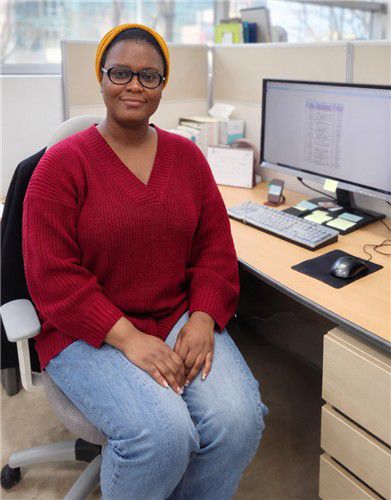 |
이마티티쿠아 아이안요 고려대 HIAI 연구원 연구교수가 사무실에서 포즈를 취하고 있다. [이하 제공 사진] |
티티 씨가 한국과 인연을 맺은 것은 대학 시절이었다. 고등학교를 마친 뒤 미국 워싱턴DC 소재 아메리칸대학에서 경영정보시스템(MIS)을 공부하던 중 한국인 룸메이트를 만나면서 한국 유학길을 알게 됐다.
"룸메이트가 한국 정부 장학 프로그램(GKS)을 알려줬어요. 좋은 기회라고 생각해 지원했는데 합격했습니다."
그는 2014년 한국에 들어와 부산 동서대학교에서 1년 동안 한국어를 공부한 뒤 고려대로 옮겨 컴퓨터공학 석사와 박사 과정을 차례로 밟았다.
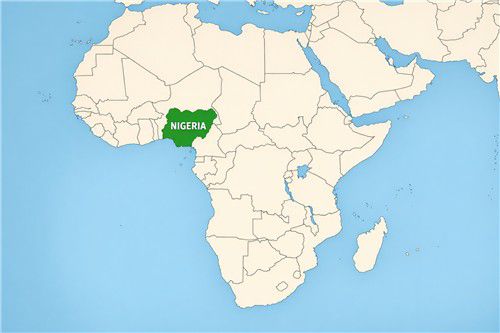 |
아프리카 지도 속 나이지리아 [AI 작성] |
한국어는 주로 드라마를 보며 익혔다고 한다.
"'커피 프린스' 같은 드라마를 시청하면서 한국어와 한국 문화를 많이 배웠어요."
한국 사회를 경험하며 가장 인상 깊었던 점으로는 교육 문화를 꼽았다.
"한국과 나이지리아 모두 자녀 교육을 중요하게 여기고 자녀의 성공을 부모의 성공처럼 여기는 문화가 있다고 생각합니다. 다만 한국에서는 1등을 향한 경쟁이 더욱 치열하고, 1등이 아니면 안 된다는 분위기가 강하게 느껴졌습니다."
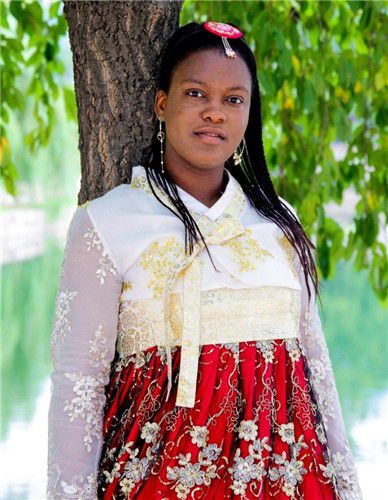 |
한복 차림으로 한 컷! |
10년 넘게 한국에서 살면서 한국과 나이지리아가 생각보다 비슷한 점이 많다는 사실도 깨달았다. 대표적인 사례로 공동체를 중시하는 문화가 닮았다고 말했다.
티티 씨는 일상에서 한국 생활의 편리함을 자주 체감하고 있다.
"온라인으로 주문하면 다음 날 바로 물건이 배달되는 서비스가 너무나 편리합니다."
그는 한국의 정보기술 환경도 높게 평가했다.
"한국은 첨단 기술이 일상생활 속에 자연스럽게 녹아 있는 나라입니다. 버스 운행정보 시스템을 보세요."
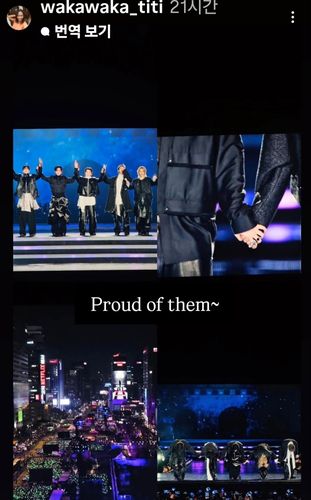 |
BTS의 21일 광화문 공연을 소개하는 티티 씨 인스타그램 페이지 (갈무리 사진) |
한류 팬이기도 한 티티 씨는 한국 드라마를 통해 K-팝과 음식, 뷰티 등 'K-컬처'를 처음 접하게 됐다며 빅뱅이나 방탄소년단(BTS) 같은 글로벌 스타들의 영향으로 한류가 아프리카에서 확산하고 있다고 말했다.
나이지리아에서는 자기가 좋아하는 한국 가수의 영향을 받아 다양한 한국 문화를 체험해 보려는 아이들이 늘고 있다고 했다.
한 사례로 8살짜리 조카가 BTS 멤버 정국이 좋아하는 걸 먹어보고 싶다며 나이지리아에선 구하기 쉽지 않은 불닭볶음면을 보내달라고 했다고 덧붙였다.
그는 한국에 살면서 화면 속이 아닌 현실에서 K문화를 직접 경험할 수 있는 것이 큰 즐거움이라고 말했다. 그는 나중에 BTS 광화문 공연장에도 갔다고 말했다.
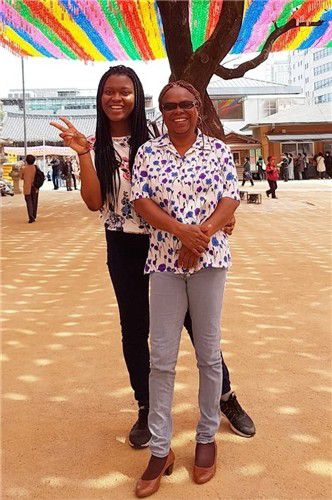 |
조계사에서 어머니와 함께 |
티티 씨의 가족도 한국과 인연을 맺고 있다.
그는 "어머니가 한국과 나이지리아를 오가며 지내고 있다"며 어머니도 한국어를 배우고 한국어능력시험(TOPIK)을 보기도 했다고 말했다.
현재 30대 중반인 티티 씨는 연구와 공부에 집중하다 보니 개인적인 삶이 뒤로 미뤄지는 경우가 많았다고 한다.
"공부하느라 데이트할 시간이 거의 없었습니다."
그는 "좋은 사람이 나타나면 결혼할 생각이 있다"며 "국적은 중요하지 않으니 주변에 좋은 사람이 있으면 소개해 달라"고 웃으며 말했다.
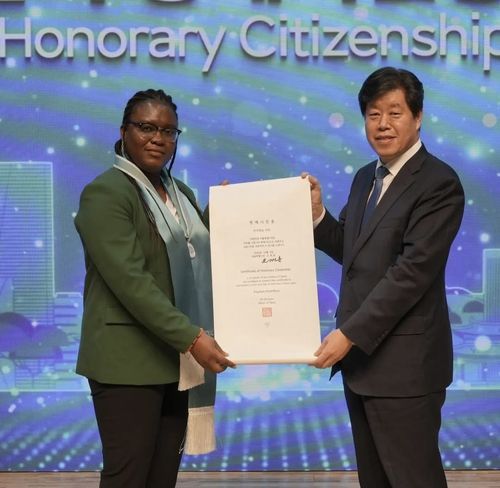 |
서울시 명예시민증을 받는 티티 씨 |
티티 씨는 서울시 명예시민이기도 하다.
외국인 주민 지원 봉사와 문화 교류 활동 공로 등을 인정받아 2022년 명예시민으로 선정됐다.
그는 아프리카에 대한 한국 사회의 인식이 다소 아쉽다고 느꼈던 일화를 소개했다.
"언젠가 교회 행사에 참석했는데 어떤 분이 '아프리카에선 음식이 부족하다고 하니 많이 먹으라'고 그러시더라고요. 하지만 아프리카도 여러 계층의 사람들이 있고 경제 수준도 다양합니다."
인터뷰 말미에 다시 연구 이야기로 돌아갔다. 그는 인공지능 시대에 연구자가 갖춰야 할 자세로 꾸준한 학습을 꼽았다.
"AI는 끊임없이 공부해야 하는 분야입니다. 꾸준히 배우고 연구하는 자세가 가장 중요합니다."
그러면서 앞으로도 한국에서 연구 활동을 이어가며 인공지능 기술 발전에 기여하고 싶다고 말했다.
"공부하고 연구하는 것이 제게 가장 중요한 일입니다."
parksj@yna.co.kr
[Africans in Our Midst] (26) Nigerian AI researcher Titi develops Korean-language understanding models
Works on natural language processing at Korea University; 'need models tailored to Korean'
'Influenced by BTS' Jungkook; niece in Nigeria asks for Buldak ramyeon'
At Korea University's Human-Inspired AI (HIAI) Institute, Nigerian artificial intelligence researcher Imatitikua Danielle Aiyanyo, known as Titi, is working on technologies that enable computers to understand the Korean language.
Among about a dozen researchers at the institute, she is the only foreign national. Though she has a Korean name, Son Se-hyun, she is simply called Titi by her colleagues.
Since earning a Ph.D. in computer science at Korea University, she has focused on natural language processing (NLP), particularly on enabling machines to interpret human language, including Korean. Her research centers on semantic analysis, which aims to improve the performance of Korean-language AI models.
"Early AI models did not sufficiently understand Korean," she said in an interview at her lab on March 10. "It is important to develop models tailored to the Korean language."
Titi's connection to Korea began during her college years in the United States. While studying management information systems at American University in Washington, D.C., she met a Korean roommate who introduced her to Korea's government scholarship program.
"My roommate told me about the Global Korea Scholarship program. I thought it was a great opportunity, so I applied and was accepted," she said.
She arrived in Korea in 2014, first studying Korean for a year at Dongseo University in Busan before moving to Korea University, where she completed both her master's and doctoral degrees in computer science.
She said she learned Korean largely through watching television dramas.
"I learned a lot about the language and culture from dramas like 'Coffee Prince,'" she said.
Living in Korea for more than a decade, Titi said one of the most striking aspects of Korean society was its strong emphasis on education.
"Both Korea and Nigeria place strong importance on education and tend to view children's success as a reflection of their parents' success. However, in Korea, competition to be the top student is more intense, and there is a stronger sense that one must come first," she said.
She added that over time she has also found similarities between Korea and Nigeria, particularly in the importance placed on community.
Titi said she frequently experiences the convenience of daily life in Korea.
"The service where you can order something online and receive it the next day is very convenient," she said.
She also praised Korea's advanced digital infrastructure.
"Korea is a country where cutting-edge technology is integrated into everyday life. The public transportation systems, such as real-time bus information, are a good example," she said.
Titi said she became familiar with what is often referred to as K-culture, which includes K-pop, food and beauty, through Korean dramas, adding that the Korean Wave has been spreading in Africa with the influence of global stars, such as Big Bang and BTS.
She noted that in Nigeria, children are increasingly influenced by their favorite Korean artists and often want to try different aspects of Korean culture.
As an example, she said her 8-year-old niece once asked her to send her Buldak ramyeon, spicy Korean instant noodles, because BTS member Jungkook likes them, and they are not easy to find in Nigeria.
"One of my greatest joys is living in Korea, where I can experience K-culture in person rather than through a screen," she added.
She later mentioned that she had also visited the BTS concert venue in Gwanghwamun on March 21.
Her family has also developed ties to Korea. Her mother frequently travels between Korea and Nigeria, and has studied Korean and taken the Test of Proficiency in Korean (TOPIK).
Now in her mid-30s, Titi said her personal life has often taken a back seat to her studies and research.
"I've hardly had time to date because I've been focused on studying," she said.
With a laugh, she added: "If I meet the right person, I would consider marriage. Nationality doesn't matter; if you know someone good, feel free to introduce them."
Titi was named an honorary citizen of Seoul in 2022 in recognition of her volunteer work supporting foreign residents and promoting cultural exchanges.
She also recalled moments when she felt that awareness about Africa in Korean society remains limited.
"At a church event, someone once told me to eat a lot because 'there is not enough food in Africa,'" she said. "But like any other continent, Africa has diverse societies and different economic levels."
Asked about the mindset required of researchers in the rapidly evolving AI era, Titi emphasized the importance of continuous learning.
"AI is a field where you must keep studying," she said. "Constant learning and research are essential."
She added that she hopes to continue her research in Korea and contribute to the advancement of AI technologies.
"Studying and doing research are the most important things in my life here."
(By Park Se-jin, senior writer for Ubuntu Content Team of Yonhap News)
※ Editor's note: This article is the English version of a Korean-language story, helped by AI translation in part and checked by an editor.
parksj@yna.co.kr
▶제보는 카카오톡 okjebo
▶연합뉴스 앱 지금 바로 다운받기~
▶네이버 연합뉴스 채널 구독하기
<저작권자(c) 연합뉴스, 무단 전재-재배포, AI 학습 및 활용 금지>
이 기사의 카테고리는 언론사의 분류를 따릅니다.
기사가 속한 카테고리는 언론사가 분류합니다.
언론사는 한 기사를 두 개 이상의 카테고리로 분류할 수 있습니다.
언론사는 한 기사를 두 개 이상의 카테고리로 분류할 수 있습니다.
