

 |
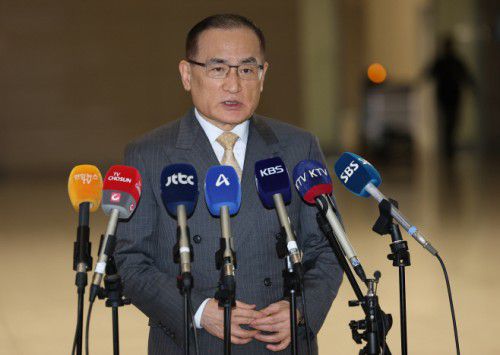
Wi Sung-lac, national security adviser at the presidential office, speaks to reporters before departing for the United States via Incheon International Airport Terminal 2 on December 16 to discuss follow-up measures to the South Korea–US summit agreements. / Source: Yonhap News |
Wi Sung-lac, national security adviser at the presidential office, said on December 18 that South Korea and the United States have agreed to move quickly to implement follow-up measures stemming from agreements reached by their leaders, citing progress in recent consultations with US officials.
Speaking in a phone interview with Yonhap News TV while visiting the United States, Wi was asked about the outcome of his meetings with US counterparts. “It was good. There was progress,” he said, adding that while it was difficult to draw firm conclusions at this stage, the two sides agreed to expedite follow-up steps to the leaders’ agreements.
His remarks suggest advances in discussions on South Korea’s plans to build nuclear-powered submarines, including follow-up procedures related to uranium enrichment and the reprocessing of spent nuclear fuel.
Wi traveled to the United States on December 16 to discuss swift implementation measures for items included in a joint fact sheet released after the recent South Korea–US summit.
On the day of his arrival, Wi met with US Secretary of State Marco Rubio, who also serves as White House national security adviser. The following day, he held talks with US Energy Secretary Chris Wright.
Wi was scheduled to travel from Washington, DC, to New York later on December 18 to meet with United Nations officials before returning to South Korea. He is expected to discuss issues related to the Korean Peninsula during those meetings.
Before departing for the United States, Wi told reporters that discussions during the trip could also touch on North Korea–US and inter-Korean dialogue, saying he planned to consult first with US officials and then with the United Nations.
ⓒ "젊은 파워, 모바일 넘버원 아시아투데이"
이 기사의 카테고리는 언론사의 분류를 따릅니다.
기사가 속한 카테고리는 언론사가 분류합니다.
언론사는 한 기사를 두 개 이상의 카테고리로 분류할 수 있습니다.
언론사는 한 기사를 두 개 이상의 카테고리로 분류할 수 있습니다.
