

 |
Graphics by AJP Song Ji-yoon |
<이미지를 클릭하시면 크게 보실 수 있습니다> |
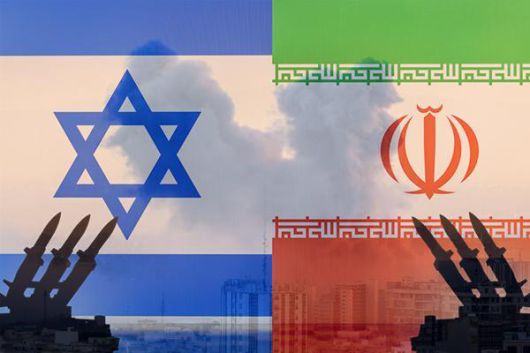
The unusual diplomatic exchange unfolded within hours of each other in central Seoul, with the Iranian ambassador accusing the United States and Israel of launching an illegal war and the Israeli envoy defending the military campaign as a necessary step to stop Iran’s nuclear and missile programs.
The dueling briefings underscored how the widening conflict — sparked by U.S.-Israeli strikes on Iran — is rapidly becoming a global information battle as well as a military confrontation.
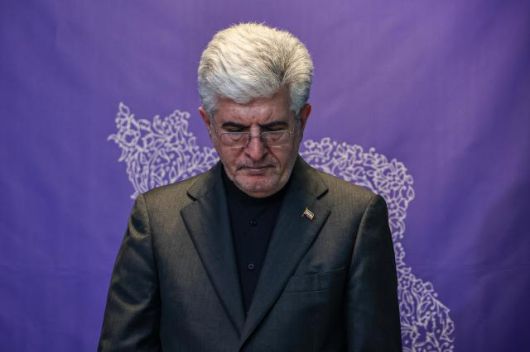 |
Saeid Koozechi, ambassador of the Islamic Republic of Iran to South Korea, observes a moment of silence before delivering an official statement on Israeli and U.S. military strikes against Iran at the Iranian Embassy in Yongsan, Seoul, March 5. AJP/Yoo Na-hyun |
<이미지를 클릭하시면 크게 보실 수 있습니다> |
Speaking at the Iranian Embassy in Yongsan, Ambassador Saeed Kouzechi blamed Washington and Israel for triggering the conflict.
“The responsibility for the current crisis in West Asia lies with the United States and the Zionist regime of Israel,” Kouzechi said. “Today’s war did not originate from Iran’s actions, but from the deliberate decision of the United States and Israel to abandon diplomacy and choose military aggression.”
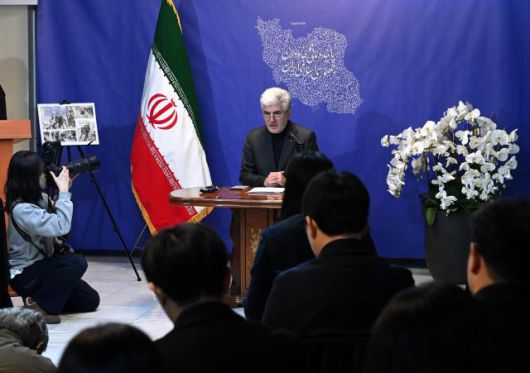 |
Saeid Koozechi, ambassador of the Islamic Republic of Iran to South Korea, delivers a statement on Israeli and U.S. military strikes against Iran at the Embassy of the Islamic Republic of Iran in Yongsan, Seoul, March 5. AJP/Yoo Na-hyun |
<이미지를 클릭하시면 크게 보실 수 있습니다> |
The ambassador said Iran had engaged in negotiations with Washington twice in the past nine months over its nuclear program, arguing that the attacks during ongoing diplomacy demonstrated that the talks were used as a cover for military action.
He accused Israel of violating international law and targeting civilians, citing an alleged strike on a girls’ elementary school in the southern Iranian city of Minab.
“The attack killed 165 students and seriously injured dozens more. Such acts are clear war crimes and blatant violations of international humanitarian law,” he said.
“The Islamic Republic of Iran will not hesitate to defend itself. Our response is not revenge but legitimate self-defense,” Kouzechi said.
The ambassador also rejected accusations that Iran is pursuing nuclear weapons, calling them “fabricated claims and disinformation.”
“The country possessing nuclear weapons in the region is not Iran but Israel,” he said, noting that Israel is not a signatory to the Nuclear Non-Proliferation Treaty (NPT).
 |
Rafael Harpaz, Israel’s ambassador to South Korea, enters a press conference at the HJ Business Center in Jongno District, Seoul, on March 6, 2026, to brief reporters on Israel’s military operation “Roaring Lion” and the government’s position. AJP / Han Jun-gu |
<이미지를 클릭하시면 크게 보실 수 있습니다> |
Roughly an hour later in a separate venue in central Seoul, Israeli Ambassador Rafael Harpaz offered a sharply different account.
“Iran was approaching the final stage of nuclear weapon capability,” Harpaz said. “If we did not act now, we might not have another opportunity to prevent it.” He argued that years of diplomatic efforts had failed to stop Iran’s nuclear ambitions.
“Iran has been explaining its nuclear program for decades and promising that it is peaceful,” he said. “But each time, the negotiations simply bought them more time to advance their program.”
 |
Rafael Harpaz, Israel’s ambassador to South Korea, enters a press conference at the HJ Business Center in Jongno District, Seoul, on March 6, 2026, to brief reporters on Israel’s military operation “Roaring Lion” and the government’s position. AJP / Han Jun-gu |
<이미지를 클릭하시면 크게 보실 수 있습니다> |
Harpaz also pointed to Iran’s financial support for Hezbollah in Lebanon, estimating that Tehran has provided the group with $2 billion to $3 billion in funding.
The ambassador framed the operation as a defensive measure for Israel’s security.
“When you imagine a one-ton warhead mounted on a ballistic missile hitting a densely populated Israeli city, the threat becomes very clear,” he said.
Dispute over civilian casualties
The two ambassadors clashed sharply over allegations that Israeli strikes hit civilian facilities. Iran said attacks on schools and hospitals represented clear violations of international humanitarian law.
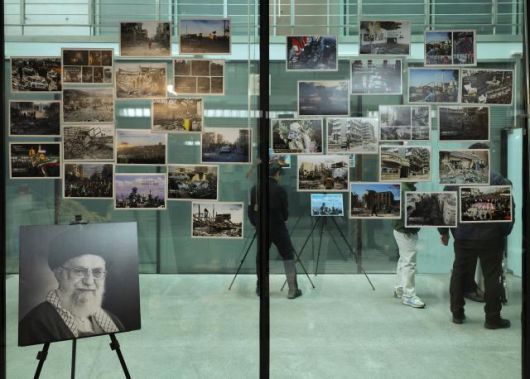 |
Saeid Koozechi, Iran’s ambassador to South Korea, delivers an official statement on Israeli and U.S. military strikes against Iran at the Embassy of the Islamic Republic of Iran in Yongsan, Seoul, on March 5. AJP/Yoo Na-hyun |
<이미지를 클릭하시면 크게 보실 수 있습니다> |
The diplomatic clash in Seoul reflected a broader divide over the goals and legitimacy of the war.
Iran framed the conflict as an unlawful act of aggression aimed at undermining its sovereignty and destabilizing the region. Israel, by contrast, presented the campaign as a preemptive effort to neutralize a nuclear and missile threat that could endanger its survival. Both ambassadors acknowledged the risk of a prolonged conflict but expressed confidence in their respective positions.
“Iran has faced many invasions in its history and will continue to resist aggression,” Kouzechi said.
Harpaz said Israel believes the military campaign will not become an endless war. “We trust our capabilities and the support of our allies,” he said
Joonha Yoo and Ryu Yuna 기자 joonhayoo94@ajupress.com
- Copyright ⓒ [아주경제 ajunews.com] 무단전재 배포금지 -
이 기사의 카테고리는 언론사의 분류를 따릅니다.
언론사는 한 기사를 두 개 이상의 카테고리로 분류할 수 있습니다.
